 LemonArcade






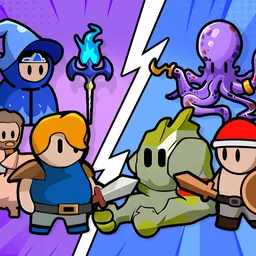







A word on what you are actually getting here, because the title invites confusion. Supercell's Clash Royale is a mobile app with online matchmaking, a Supercell ID login and years of live-service content, and it does not run inside a web page. What LemonArcade serves under this name is a browser-only card battler in the same mould, built in HTML5 and known on other portals as Clash of Vikings, first published in February 2017. It reproduces the shape of a Clash Royale match, with an elixir bar, an eight-card hand, lanes and towers, against a computer opponent. It is unofficial, it is not made by Supercell, and it is the version that works on a school Chromebook when the real app is out of reach.
The formula it copies is worth understanding, because it is one of the most influential designs of the last decade. Supercell, the Finnish studio behind Clash of Clans, soft-launched Clash Royale in January 2016 and released it worldwide on 2 March 2016. Each player brings a deck of eight cards, holds four at a time, and spends a slowly refilling pool of elixir to drop troops, spells and buildings onto their half of a small arena split by a river. Three towers stand on each side; destroy more of the enemy's than they destroy of yours inside three minutes, or take the king tower outright, and you win. The whole game is a series of trades: a cheap card that kills an expensive one is a profit, and profits accumulate into a push the other side cannot answer.
The browser version keeps that skeleton and trims everything around it. You get a fixed pool of eight Viking-themed cards rather than a collection of more than a hundred, so there is no chest opening, no card levelling and no ladder of themed arenas to climb. What remains is the tactical core. Each card has an elixir cost, elixir regenerates at a steady rate and doubles in the final minute exactly as it does in the original, and the roster covers the archetypes that matter: cheap ranged units that chip from behind, heavy warlords that soak tower fire, and spells that clear clumps. You drag a card onto your side of the field with the mouse, the unit walks its lane, and the fight resolves itself.
Because there is no progression, every match starts equal, which changes how it feels compared with the app. On mobile, a large part of winning is having higher-level cards than your opponent; here the only variable is how you spend elixir. The computer opponent is not clever, and once you learn that it tends to overcommit to one lane, the standard counter of defending cheaply and punishing on the other side works reliably. That makes it a good teaching tool for the real thing and a short-lived challenge for anyone who already plays at a high trophy count, though it stays a pleasant way to kill three minutes.
It suits three groups. People who cannot install the app, whether because of a locked-down device or a blocked store, get the closest thing available in a browser. Newcomers who find the real game's matchmaking punishing can learn elixir trades and lane pressure without losing trophies. And lapsed players who want five minutes of tower rushing without downloading a two-gigabyte update get exactly that. It is not for anyone hoping for online opponents, clan wars, the Merge Tactics mode Supercell added in 2025, or the esports ladder; those exist only in the official app, or in Supercell's official PC route through Google Play Games.
On LemonArcade it runs free in the browser with no download and no account, and nothing here will ever ask for a Supercell ID or a verification code, which is a useful test for any page claiming to offer Clash Royale on the web. Matches last three minutes plus overtime, so a session can be as short as one game. It runs on desktop, tablets and phones, with drag-and-drop on touch working as naturally as with a mouse. Difficulty is low against the AI, so treat it as a sandbox for practising trades rather than a competitive mode.