 LemonArcade



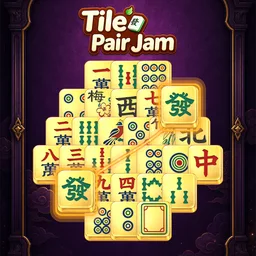























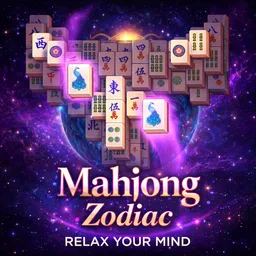




Mahjong Tide is a mahjong solitaire game with a painting behind every board. The rules are the ones you already know: tiles are stacked in a layout, a tile is free when nothing sits on top of it and at least one of its long sides is open, and you clear the table by removing free, identical tiles two at a time. What Mahjong Tide adds is structure and a guarantee. Every deal is generated from a real solution, so a board can always be cleared, and the game is organised into four ways to play rather than a single endless list of layouts.
Flow is the endless mode: one board after another, as long as you want to keep going. The daily puzzle is a single shared deal that everyone plays the same day, which gives it the small ritual of a crossword. The Tokaido journey is a 55-station route along Japan's old road from Edo to Kyoto, where each station is a board and the journey is the progression. Free Play opens hundreds of layouts without any order imposed. Clearing boards unlocks paintings, so the art is a reward as well as a backdrop.
Mahjong solitaire descends from Shanghai, the tile-matching game created by Brodie Lockard in 1981 and popularised by Activision in 1986. Nearly every version since has used the same logic, and the differences lie in presentation and in how fairly the boards are dealt. Mahjong Tide sits firmly on the fair side: because every deal starts from a solution, a stuck board is always the result of your choice of moves rather than bad luck, which changes how you approach every layout.
It carries the Puzzle and Casual categories, and both apply. Puzzle, because clearing a board well requires reading the stack and keeping options open. Casual, because nothing is timed against you, a session can be a single Flow board or an hour on the Tokaido, and the controls are a click or a tap on two tiles. It is for players who like mahjong solitaire and want a calmer, better-made version, and for anyone who has ever quit a board that turned out to be unwinnable.