 LemonArcade

















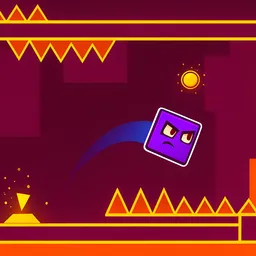


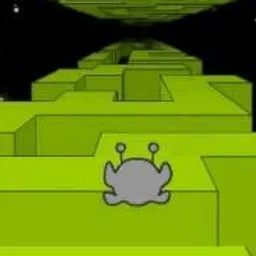

Geometry Arrow puts you in control of an arrow flying through a cave, and asks one thing of you: do not touch anything. Spikes and obstacles fill the passage, the arrow keeps moving, and your only influence is when you press. Six levels each raise the difficulty over the last, which makes it a game you finish rather than one you grind — a rarer shape than it sounds in browser catalogues.
It belongs to the single-input skill games, a lineage running back through the one-button arcade titles where the entire challenge is compressed into the timing of one press. That constraint is the design rather than a limitation. With no movement to steer and no speed to manage, two players with identical reflexes produce completely different results based only on when they commit — and improvement is visible run to run in a way that more complex games rarely offer.
Because there is nothing to learn, the first attempt is already a real attempt. There is no tutorial to sit through and no control scheme to memorise: you press, the arrow rises, you release, it falls. What takes practice is reading the cave far enough ahead that your press is a decision rather than a reaction, which is the difference between clearing level two and clearing level six.
It is filed under Platformer, Arcade and Action, and each label picks out something real. Platformer because navigating the space is the whole task. Arcade because runs are short and the difficulty curve expects repetition. Action because the pace leaves no planning time once a level is underway. Carrying three categories means it surfaces in each of those collections rather than being filed once and buried.