 LemonArcade

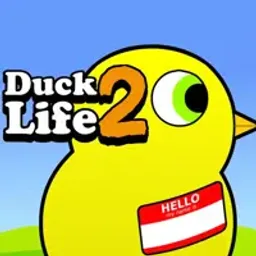








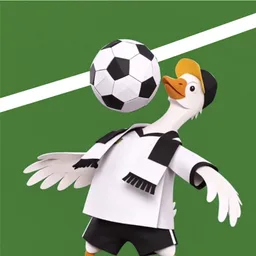










Duck Life is the 2010 Flash game that started one of the longest-running series in browser gaming, made by Wix Games, a small studio in Brighton, England, run by Simon Wixon. The setup is a children's story with a sports-management heart: a tornado has flattened your farm, the only thing left is one duckling, and the plan to rebuild is to train that duckling until it can win enough prize money at the races. The version here is the modern remake, converted from Flash to Unity WebGL so it keeps running now that browsers have dropped the old plugin, which is why the page carries the unblocked label so many school players search for. Fifteen years on, the series has grown to more than half a dozen entries and mobile apps, but this first game is still the cleanest expression of its idea.
The loop has three halves. Training is where you spend most of your time, and it splits into three separate minigames, one per skill. Running is a side-scrolling obstacle course where you jump logs and stumps with the up arrow. Swimming has you leaping over floating obstacles and diving under others with up and down. Flying is a vertical dodge game where you steer through gaps in the clouds and grab the coins drifting past. Each session earns experience in that skill and coins for the shop, and the longer you survive the more you get. The minigames speed up the longer a run lasts, so a level-thirty duck is not only faster in races but also faces a harder training course than it did at level five.
The catch that gives the game its shape is energy. Training drains the duck, and a tired duck cannot train at all, so you have to feed it seeds bought from the shop with the coins the training produced. That loop, train, earn, feed, train, is the core of the whole series, and it makes the early game a small economy puzzle: spend on seeds to keep training, or save for the hats and feather colours that do nothing but look good. Skill levels are capped by which league you have reached, so at some point the only way forward is to race.
Races are where the three skills meet. Each course is a string of running, swimming and flying sections, and your duck performs each one automatically at a speed set by the matching skill level, so the race is really a report card on your training. Win the amateur league and the advanced one unlocks, then professional, and finally the world championship, with entry fees and prize money growing at each step and the rival ducks getting noticeably faster. Balanced training beats a single maxed skill, because a course with a long swim will punish a duck that only ever ran. Watching a race is oddly tense for something you cannot control: you see exactly which section cost you and know what to train next.
It is a slow-burn game and that is the point. There is no fail state beyond losing a race and a small entry fee, and the difficulty sits in patience rather than reflexes: a full run to the world championship takes a few sessions of grinding, which is exactly why the series took off on Cool Math Games and in classrooms, where a game you can pick up for ten minutes at a time is worth more than one that needs an hour. It suits younger players learning to manage resources, and it suits anyone who wants something relaxing with a visible sense of progress.
On LemonArcade it runs free in the browser with no download and no account. The Unity remake is desktop-first, using the arrow keys for training and mouse clicks for menus; on a phone the tap controls cover the minigames but the small interface is fiddly, so a laptop or Chromebook is the better fit. Progress is saved in the browser, so keep playing on the same device and do not clear site data if you want your world champion to survive. Sessions can be as short as one training run or as long as a whole league.