 LemonArcade
















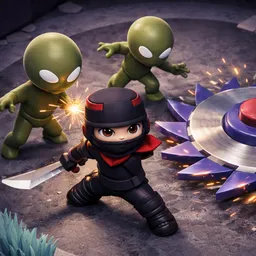


Snail Bob 8, subtitled Island Story, is the eighth episode in the gentle puzzle series about a snail who cannot stop walking. This chapter opens with Bob ice fishing with his Grandpa until a mischievous frog saws through the ice and sets him adrift; he washes up on a tropical island and has to make his way home across thirty levels of beaches, jungle and native frog territory. The series comes from Hunter Hamster, the studio behind every Snail Bob episode, and Island Story is widely treated as the closing chapter of the original run.
The idea that makes Snail Bob different from most games aimed at kids is that you never steer Bob. He trundles forward on his own, cheerfully and relentlessly, straight toward whatever is in front of him — including the trap. Your job is to operate the level itself: click levers, press buttons, rotate platforms, plug gaps and redirect machinery so that the path Bob was going to take anyway becomes a safe one. You are not the character in this game. You are the world around him, working a few seconds ahead of a friend who trusts you completely.
That style of play has a long family history. Games where the characters act on their own and the player manages the environment go back to Lemmings, the classic that popularized indirect control, and Snail Bob is one of the friendliest versions of that idea ever made — one slow snail instead of a hundred falling lemmings, and no way to fail so badly it hurts. When a trap does catch Bob, the level simply restarts, and because levels are short, trying again costs almost nothing.
Two buttons keep the puzzles fair. You can stop Bob at any moment — he tucks into his shell and waits patiently until you release him — and you can toggle his pace between a stroll and a hurry. Nearly every puzzle in Island Story is really a question about those two controls: park Bob somewhere safe while you rearrange the machinery, then decide whether the newly opened path needs to be crossed slowly or at double speed before it closes again. Timing matters, but it is always timing you set up yourself, never reflexes under pressure.
Behind the main task sits a quieter second game. Every level hides three stars, tucked behind scenery, inside odd corners, or in places only a detour reveals, for ninety across the episode. Reaching the exit asks one kind of attention; finding the stars asks another — poking at the background, questioning anything that looks slightly out of place. On LemonArcade the game sits under Puzzle and Kids, and it earns both labels: readable enough for young players to finish alone, layered enough that finishing with every star is a genuinely different challenge.