 LemonArcade






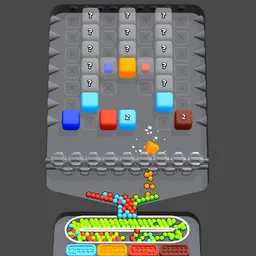















Duck Rescue: Screw Clear belongs to a puzzle genre that appeared almost from nowhere around 2023 and then took over app stores: the screw puzzle. The premise is mechanical rather than abstract. A structure of overlapping planks is bolted together with coloured screws. You remove screws one at a time, planks come loose, and gravity does the rest. Somewhere in the middle of that structure, ducks are trapped and need a clear path out.
What turns this from a fidget toy into a genuine puzzle is order. Every screw you pull changes which planks are still supported and how the remaining ones will swing when they drop. Remove the wrong one first and a plank rotates across the exit instead of away from it, sealing the ducks in rather than freeing them. The board does not reset the moment you err — you have to see the consequence play out, which is what teaches you to look ahead.
The colour system adds the second layer. Screws come in colours and must go into matching slots, and the number of open slots is limited. That turns each level into a small inventory problem running alongside the physics one: you cannot simply pull screws in whatever order looks convenient, because if you fill every slot of one colour with nowhere to put the next, you are stuck. Managing the holding area is often harder than reading the structure.
The ducks are the game's presentational conceit rather than a mechanic — they bob, they look worried, they cheer when freed — but they do real work in making the physics legible. Watching a specific character get released reads more clearly than watching a block reach a goal square, and it is why the genre keeps reaching for rescue framing rather than abstract shapes.
It is a laid-back game by intent. There is no timer, levels are short, and failure means retrying a board rather than losing progress. That makes it well suited to short sessions, and it is why the genre performs so well on phones — a level fits neatly into the length of a queue or a bus stop.
Duck Rescue: Screw Clear is developed by Yodomi and distributed through Playhop, the Yandex games platform, so it runs in a browser tab with no install and no account. Playhop plays a short advertisement before the game starts, which is how the platform pays the developer.