 LemonArcade




























Enduro Cross Motorsport is a side-view motorbike stunt racer built on a simple promise: get from the start line to the finish flag as fast as you can without landing on your head. The track between those two points is a rollercoaster of ramps, logs, drops and giant gaps, and the bike's balance is entirely in your hands. Lean back too far over a jump and you loop; lean forward too far and you go over the bars. Each level is a short physics puzzle you solve at speed.
The controls could not be smaller. Up and Down accelerate and brake, Left and Right lean the rider, and leaning in the air is how you flip. That tiny vocabulary hides a lot of depth, because the same lean that keeps you level on a landing is the one that pulls a backflip off a ramp, and the clock is always running. Every track has a target time to beat, and the difference between a clean run and a great one is usually a flip you dared to add.
Finishing levels and pulling tricks earns rewards that go into upgrades: engine power for faster acceleration, suspension to absorb harder landings, and cosmetics for the bike and rider. The upgrade loop is what turns a one-off time trial into a progression game. A track that felt impossible on the stock bike becomes a sprint a few upgrades later, and then the goal shifts from finishing to shaving tenths off your best time, track by track, until the whole list is green.
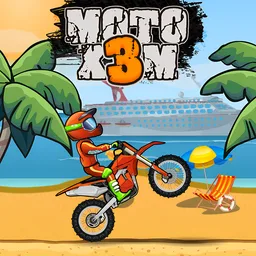
The game openly follows the Moto X3M tradition, which itself descends from the physics bike games that took off on the web in the 2000s: Trials-style balance, a side-on camera, and tracks that are as much obstacle course as racetrack. Enduro Cross Motorsport keeps that formula and dresses it in jungle, warehouse and junkyard settings. It is not a licensed motorsport product; the name describes the style of riding, not a real championship, and the bikes are generic rather than licensed models.
It sits under Driving, Sports and Arcade on LemonArcade, which covers its three sides: it is a vehicle game, it is competitive against the clock, and its physics are arcade-forgiving rather than realistic. It plays on desktop with the arrow keys and on mobile with on-screen pedals and tilt buttons. It is fast to pick up, suitable for a general audience, and genuinely hard to master once the later tracks start demanding both speed and precision in the same jump.