 LemonArcade












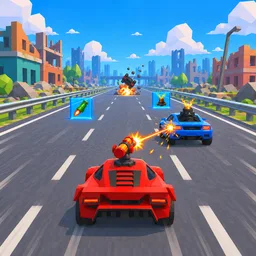







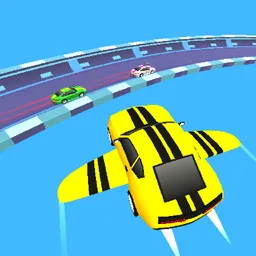

Extreme Formula Racing puts you in the cockpit of an open-wheel formula car on a road that never ends. There is no circuit to memorise and no lap counter: the track keeps unrolling in front of you, filled with rival formula cars travelling slower than you are, and the whole game is about threading past them without touching anything. Every clean overtake adds to your score and feeds your coin total, every contact ends the run. It is the kind of game you open for three minutes and close twenty minutes later, because the next attempt always feels like it could go further.
A session is short and intense. You accelerate out of the start, pick a lane, and within a few seconds the first rivals appear ahead. Speed builds steadily, so the early stretch is forgiving and the later stretch demands near-perfect reading of the road. Coins collected on the way go into a garage where new formula cars are unlocked, and the game rotates through several environments so the scenery changes as you progress. A daily leaderboard gives a reason to chase one more run after your personal best stops moving.
In genre terms, Extreme Formula Racing is an endless traffic racer wearing a single-seater livery. That format was defined on mobile by games where you dodge highway traffic at increasing speed, and it works here because the open-wheel fantasy fits it naturally: formula cars are narrow, fast and fragile, which makes close passes feel earned. The 3D presentation gives you a proper sense of closing speed, and the Driving and Arcade categories describe exactly what this is: a driving game built for reflexes and score rather than for simulation.
It suits anyone who likes racing games but does not want to learn braking points, setups or a pit strategy. Younger players will enjoy the colourful cars and the quick restarts, and older players will appreciate how much the score depends on judgement rather than on raw input speed. On desktop it is played with the arrow keys or WASD, on a phone with on-screen controls, and there is nothing to read or configure before the first run begins, which is exactly what a game built around one more attempt should offer.