 LemonArcade







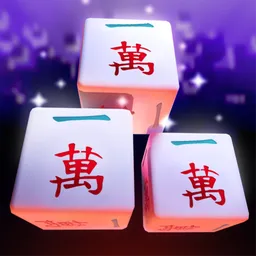

Fever Cubes: Drop Number 2048 takes the number-doubling idea of 2048 and puts it in a three-dimensional box with physics. Instead of sliding tiles on a flat grid, you hold a numbered cube at the top of the play field, move it left or right, and release it. The cube falls, bounces and settles among the others. When it lands on a cube with the same number, the two fuse into a cube of the next value, and that new cube can immediately fuse again with whatever it touches. The result is a merge puzzle where position matters in a physical way: a cube can roll off the top of the pile, wedge sideways or knock a neighbour into a merge you did not plan.
A session is a single continuous run. The cubes you are given arrive one at a time and you cannot skip them, so each drop is a decision about where this particular number is most useful. Early on the field is open and almost any drop is safe. As the pile rises, you are managing space as much as numbers, trying to keep equal values close to each other so the next drop can connect them. Passing 2048 is the named milestone in the title, but the game is built to continue beyond it, and the real high-score skill is setting up chain reactions where one merge triggers a cascade through the stack.
The filiation is easy to trace. Gabriele Cirulli's 2048 from March 2014 spread the doubling-tile idea everywhere, itself borrowing from 1024 and from the paid mobile game Threes. The 3D drop variants, often called cube 2048 or chain cube games, moved the same arithmetic into a physics box so that gravity and collision replace the slide. Fever Cubes: Drop Number 2048 is part of that branch and shares some DNA with physics drop-merge games like the Suika or watermelon game, where the objects fall and fuse on contact. The 3D category on LemonArcade reflects that the cubes have real depth and the camera looks into the box rather than down at a grid.
It is a good match for anyone who already knows 2048 and wants something less deterministic, and for players who like the tactile side of physics games, watching a stack wobble and collapse into a chain of merges. The portrait layout and one-finger control make it a natural phone game, but it works just as well with a mouse on desktop. Because a run can be short or long depending on how well you manage space, it fits both a quick break and a longer attempt at a personal best.