 LemonArcade










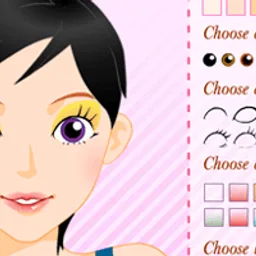













Gacha Club is a character studio first and a game second. You assemble anime-styled characters from an enormous wardrobe — hairstyles, outfits, accessories, eyes, mouths, poses — then arrange them into scenes with props, backgrounds and dialogue boxes. Most of its audience treats it less as something to beat and more as a free art tool, which is exactly how the developer positioned it. The version hosted here is a web port of the original app, published on the Playhop platform by Vetur New Games and rated 12+ there.
The original is by Lunime, the studio behind the whole Gacha series. Gacha Club released in June 2020 on Android, with Windows following in July and iOS in August, and during development it was straightforwardly called Gacha Life 2 — it is the direct successor to Gacha Life, the 2018 app that made Lunime's name. The sequel kept the dress-up core and expanded nearly every system around it: more clothing items, more adjustable body and face options, deeper color controls and far more character slots.
The numbers explain why creators settled on it. You can maintain one hundred characters at once — ten main slots plus ninety extras — and almost every item on a character can be recolored individually, so two players using identical assets still produce visibly different casts. Studio mode is where those casts go to work: characters are placed into scenes, given poses and expressions, positioned against backgrounds with props, and strung together with dialogue, including a narrator option for storytelling between speakers.
There is also a conventional game attached. Gacha Club includes a battle system in which you collect over 180 units through gacha pulls and run them through four modes — Story, Training, Tower and Shadows of Corruption — plus a set of mini games that pay out the gems and currency the pulls consume. Notably, the economy stays internal: customization is not gated behind payment, and the gacha mechanic that names the series applies to battle units rather than to the wardrobe.
What sets Gacha Club apart from other dress-up games is the community built on top of it. On YouTube and TikTok, an entire genre of Gacha content — skits, mini movies, music videos — is produced using its studio as an animation shorthand, and that ecosystem is larger than the game itself. Parents sometimes discuss that wider fan scene, since videos made by the community range from wholesome to not, but the distinction worth keeping is that the app in front of you is an offline creation tool: what it outputs depends entirely on who is holding it.