 LemonArcade















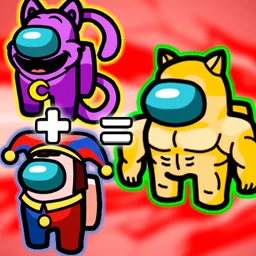

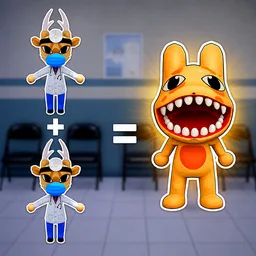














Mystery Dumpling Go: Merge IO takes three separate genres and runs them as one loop. You merge dumplings to unlock better ones, the game accumulates idle coins while you are away, and the squad you have assembled goes into short arena rounds against other players. Each part feeds the next: merging builds the squad, idle income funds the merging, and the arena is where you find out whether any of it was worth doing.
The merging is the calm half. Standard rules — combine matching dumplings to produce the next evolution, work the chain upward, manage board space. It is the part you can do without thinking hard, and it is deliberately paced so that a session always produces at least one visible unlock rather than leaving you short.
The arena is where it gets tested. Your squad enters a fast .io-style round against other players' squads, and size matters but composition matters more — a big group of low-tier dumplings loses to a smaller one built from evolutions you spent longer reaching. That relationship is what stops the merging from being busywork: the board is not a score, it is a loadout.
The idle layer is the connective tissue. Coins accrue whether or not you are playing, which means returning after a few hours gives you something to spend rather than an empty board. That is a deliberate retention mechanic and worth recognising as one, but it also genuinely suits browser play — the game is designed to be left and come back to rather than sat with.
The dumpling framing does real work. Blind-box and mystery-dumpling aesthetics have been popular across casual games recently, and the appeal is the same as any collectible: the unlock is a small surprise rather than a predictable step. Here it is layered over a merge chain, so the surprise arrives at a rate the chain controls.
The game is developed by GamesML and distributed through Playhop, the Yandex games platform, so it runs in a browser tab with no install. Dragging to merge and tapping to deploy are the whole control scheme, which works equally on desktop and touchscreen. Playhop plays a short advertisement before the game starts, which is how the platform pays the developer.