 LemonArcade

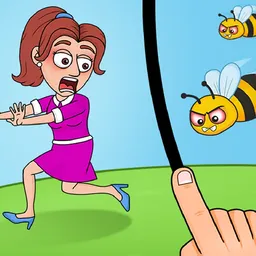






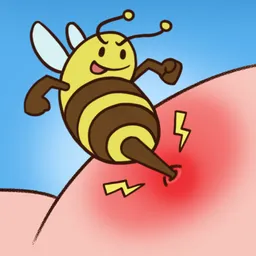





Save The Pets: Draw to Save gives you one tool — a line — and a dog that needs protecting from bees. You draw, the line becomes a real object with weight and position, and physics decides whether your solution works. That is the whole game, and it belongs to a puzzle tradition where drawing is the verb: you are not selecting an answer, you are building one and watching it be tested.
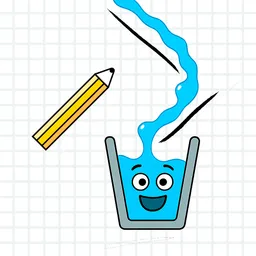
The genre goes back to Crayon Physics and runs through a long line of browser puzzlers, including Happy Glass on this same site. What they share is that a drawn line is a physical thing rather than an instruction. It can fall, it can be hit, it can be positioned badly. That is why two players can solve the same level in visibly different ways and both be right.
The useful shift in thinking is from blocking to redirecting. New players draw walls in front of threats, which works until something arrives from another angle. Experienced players draw slopes and funnels that send things somewhere harmless. A line that deflects covers far more situations than a line that stops, and the levels are built to reward that realisation.
It carries Puzzle and Casual, and both are earned. Puzzle because the levels genuinely require thought and the later ones have real solutions to find. Casual because it is one continuous drag with no timing, no dexterity and nothing to learn before you begin — a five-year-old and an adult can each play it properly, differently.