 LemonArcade


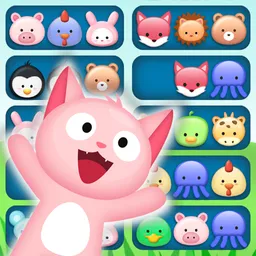






















Category Match is a sorting puzzle dressed up as a card game: instead of building runs or matching pairs, you look at a board of cartoon memoji-style face cards and work out which group each one belongs to by its character style, then place it there before the board runs out of room. It presents itself as a card game because the pieces are card-shaped, but the actual mechanic owes more to organization and sorting puzzles than to anything played with a standard deck, closer in spirit to a tidy-the-shelf puzzle than to a game of rummy.
It sits in the same design lineage as sorting and organization puzzle games that borrowed the memoji trend — cute, exaggerated cartoon faces standing in for the sortable objects other games use fruit, colors or animals for. The specific studio behind this build could not be confirmed through public listings; it appears across several browser portals, including Y8, without a consistent developer credit attached, so any claim about who made it would be a guess rather than a documented fact, and this write-up treats it that way rather than inventing a name.
Each level presents a fixed layout of memoji cards and a set of category slots. You look at a card's style — its expression, accessories or visual theme — decide which category group it matches, and move it there. Placing every card correctly clears the level; a wrong placement, or running out of open space in a category, can block your next move rather than simply undoing itself, which is why the game asks you to plan before moving anything rather than sorting on instinct alone. The category labels themselves are often left implicit, so part of the puzzle is inferring the theme from the cards already placed rather than reading it off a header.
The difficulty curve is built entirely around space and ambiguity rather than speed: early levels give you generous room and obvious category differences, while later ones shrink the available slots and introduce cards that could plausibly belong to more than one group. That turns a game that looks like simple sorting into something closer to a spatial logic puzzle, since a card placed in the wrong slot at the wrong time can lock you out of a clean solution for the rest of that level. The visual style stays light and colorful throughout, even as the underlying logic gets considerably harder to hold in your head.
It suits players who enjoy short, low-stakes puzzle sessions — sorting games, organization games, casual matching titles — more than anyone looking for reflexes or competition. There is no combo scoring or timer pressure; the entire challenge is reading the board correctly before committing to a move, which makes it a reasonable fit for kids as well as adults looking for something calmer than an arcade game, and a good option for anyone who wants a puzzle to solve rather than a score to chase.
On LemonArcade it runs free in the browser, desktop or mobile, with tap controls on touchscreens and mouse clicks on desktop, no download or account needed. There are no in-game purchases, so every level is reachable through ordinary play. A single level takes a couple of minutes for early boards and considerably longer once space runs tight, making it well suited to short breaks rather than long sessions, and the untimed pace means there is never a reason to rush a placement you are not sure about.