 LemonArcade








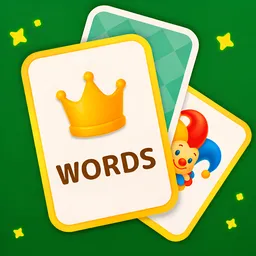
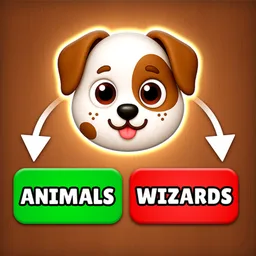




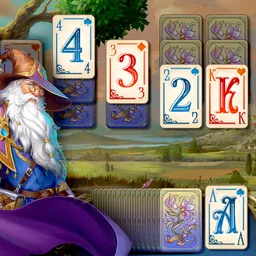

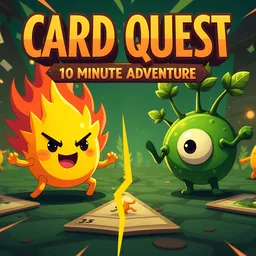

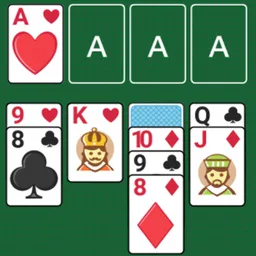
Emoji Solitaire reshapes tri-peaks solitaire — the tableau format Robert Hogue introduced in 1989 — around words and emoji instead of the usual suits and ranks. Cards carry a word and a matching emoji from a category such as Animals, Food, Music, Space, Weather, Sports or Nature, and a mobile app under the same name and category-matching idea is published separately by YouNick Games, though it could not be confirmed whether this browser build shares that same studio. The category system draws on the same word-association idea used by several vocabulary-building card apps, applying it to the well-established tri-peaks tableau rather than inventing a new board shape from scratch.
Each level opens with a set of category foundations at the top of the screen and a tableau of face-up and face-down word cards below. You drag a card onto the foundation matching its category, or stack matching category cards on the tableau to reveal whatever is face-down underneath, and the level clears once every card has been sorted into its correct pile. A card that fits more than one active category at once is common on levels with several foundations open simultaneously, so checking every foundation before committing to a match avoids picking the least useful of two valid options.
The puzzle starts with a single simple pile per level and grows more complex as you advance: blocker cards that need a specific action to remove, cards locked until a neighboring card clears, and boards juggling several categories at once. A limited pool of moves per level, rather than a timer, is what actually caps how loosely you can play. Later levels sometimes overlap two or three categories on the same tableau, which turns a simple word-matching exercise into a small planning puzzle about which category to clear first.
Swapping suits for named categories changes what the game rewards — instead of reading numerical sequence at a glance, you are reading word and category at a glance, which lands closer to a light vocabulary exercise than standard tri-peaks. The game supports more than twenty languages, an unusually broad localization for a browser card puzzle, which fits a game built around word recognition rather than numbers. The broad language support suggests the underlying word lists were built to be swapped out entirely rather than simply translated on top of a fixed English base, which is a heavier localization effort than most browser card games attempt.
It suits players who find plain numeric solitaire a little dry and want a puzzle with some word-recognition texture, as well as younger players or language learners who benefit from matching a word to its category and emoji repeatedly across dozens of short levels. It is also a comfortable pick for two people playing together casually, since reading a category and word aloud works naturally as a shared activity in a way that numeric solitaire rarely invites.
On LemonArcade it runs free in the browser on desktop and mobile with no download or account. Levels are short, usually a few minutes each, difficulty ramps up gradually through blockers and locked cards rather than through speed, and no in-game purchases are required to keep progressing. The move limit per level means a rushed early game can leave you short later, so treating the first few moves of a level with the same care as the last few pays off more here than in a timer-based card game.