 LemonArcade










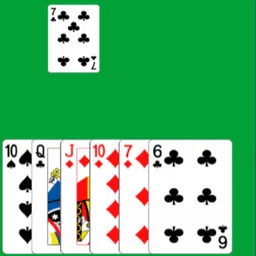








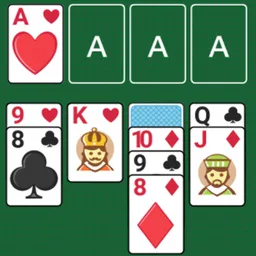


21 Rush - Ultimate Card Game takes the two most familiar card mechanics in casual gaming and welds them together: the bust-or-hold tension of Blackjack and the multi-lane board management of Solitaire. Built by ChennaiGames, an Indian mobile studio also known for the racing title Mr Racer, the game reached Google Play and the Microsoft Store as a native app before its HTML5 build spread to browser portals. The pitch is simple to state and harder to execute: get four separate card stacks as close to 21 as possible without tipping any of them over. The rule set is short enough to grasp in one round, which is the point — the depth is meant to come from repetition, not from a long tutorial.
Blackjack itself descends from European gambling games several centuries old, and the target number 21 has stayed the genre's shorthand for push-your-luck risk ever since. The name vingt-et-un, French for twenty-one, is where that target number originates. 21 Rush keeps that number as its only real inheritance from the casino version, stripping out the dealer, the betting and the house edge entirely and turning the same arithmetic tension into a solo puzzle. What used to be one hand played against a dealer becomes four hands running at once, each one your own responsibility to manage.
Every turn deals a single card and a choice: which of the four lanes receives it. Cards stack additively inside a lane, and once a lane's total passes 21 it busts; three busted lanes end the run. There is no way to simply wait out a bad draw the way a cautious Blackjack player might sit on a strong hand — every card must go somewhere, which keeps a short match feeling tense from the first card to the last. The strategic wrinkle is the TRASH button, a limited-use tool that lets you discard a card that would otherwise force a bad decision, rather than accepting the smallest of four bad options on a board with no safe move left.
Beyond the base run, 21 Rush adds a Challenge Mode that reshuffles conditions each time you play it, an in-game Help section walking through combo and lane-bonus strategy, and a scoring layer built around streaks, where consecutive good decisions multiply your score while a sloppy one resets it. Cosmetic unlocks — card backs and background themes — give the high-score chase a collection layer, though they change nothing about how the cards themselves behave.
What separates this from a straight Blackjack clone is the parallel pressure of four lanes instead of one hand. A player has to weigh risk across the whole board on every single card drawn, which turns a game that takes seconds to explain into one with real depth once the deck thins out and the safe plays run low. That makes it suit players who like fast, arithmetic-driven decisions more than long strategy sessions — the kind of person who enjoys 2048 or a Solitaire speedrun.
On LemonArcade it runs free in the browser, desktop or mobile, with no download, no account and no real-money stakes despite its Blackjack DNA. A single run lasts only a few minutes, which makes it a solid pick-up-and-play option, and the in-app purchases carried over from the native app version are optional cosmetic offers rather than pay-to-win mechanics. Anyone who has played Solitaire or Blackjack already has the basic reading; mastering four lanes at once is the part that takes practice.