 LemonArcade

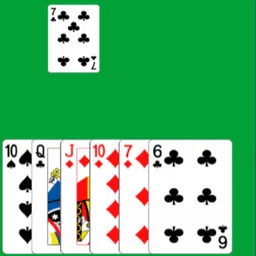























Durak is not a fan reinterpretation or a Blackjack mashup — it is one of the most widely played card games in the world, and this browser build by Card Guru Games plays it straight. The name means fool in Russian, and it refers to whoever is left holding cards when everyone else has emptied their hand. Card Guru Games' version, distributed through Playgama, keeps the traditional ruleset intact rather than reskinning it into something new, right down to the reduced deck and the attacker-defender structure that has defined the game for generations.
Durak has no known inventor and no fixed date of origin; it grew out of Russian and Soviet-era folk card play, likely sometime in the 19th or early 20th century, and spread by word of mouth long before anyone tried to standardize it. What is documented is its reach: it is regularly cited as the single most popular card game in Russia, played in homes, dormitories and trains with whatever deck happens to be on hand, and it has spawned countless regional rule variants, some swapping in different attack limits or letting more players sit at once.
The deck here is trimmed to 36 cards, six through ace in each suit, dealt six to a hand for two to four players. One card is turned face up to set the trump suit, and the game proceeds as a running duel between an attacker and a defender: the attacker lays a card, the defender must beat it with a higher card of the same suit or any trump, and unresolved attacks pile up until the defender either clears the table or picks up everything. Whoever runs out of cards first is safe; the game keeps going until only one player is left holding a hand, and that player is the durak.
What Card Guru Games' build gets right is restraint. There is no currency, no timer and no cosmetic shop pulling attention away from the table — the interface is built around reading the discard pile, counting which trumps are still live, and deciding when to pile cards onto a struggling opponent instead of defending cleanly. It is the kind of game where the rules take two minutes to learn and the actual skill lives entirely in reading the table, turn after turn, without any extra system layered on top to distract from that.
That makes it a better fit for players who enjoy memory and probability games — Uno, Egyptian Ratscrew, or an actual poker night — than for anyone looking for progression systems or unlockables. There is nothing to grind here, no meta beyond the cards in front of you, which is exactly the appeal for people tired of card games wrapped in gacha mechanics, battle passes or currency shops that have nothing to do with how the cards are actually played.
On LemonArcade it runs free in the browser with no download or account, though this build is made for desktop and mouse clicks rather than touch, so it is not the game to reach for on a phone between classes. A single hand runs anywhere from a few minutes to considerably longer once four players are all defending well, and while the rules are simple, timing a pickup versus a clean defense against a sharp opponent takes real practice — the kind that only comes from losing a few hands first.