 LemonArcade










Solitaire is the card game that came pre-installed on more computers than any other piece of software in history. Microsoft shipped Klondike with Windows 3.0 in 1990 — not because anyone thought office workers needed a card game, but because dragging cards taught people how to use a mouse. It worked, and it also produced one of the most-played games ever made almost by accident.
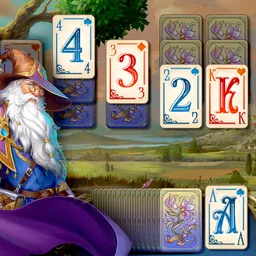
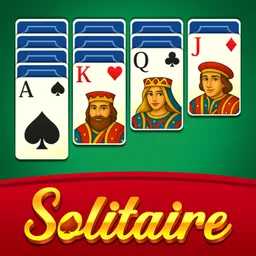
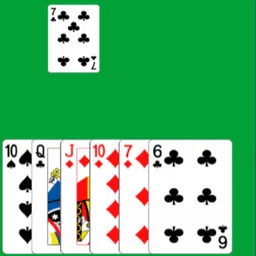
The version here is straight Klondike, played the way it has always been played. Twenty-eight cards go into seven tableau columns, the first face up and the rest hidden. The remaining twenty-four sit in the stock. Your goal is to build four foundation piles, one per suit, from ace up to king. To free the cards you need, you arrange the tableau in descending order with alternating colours: a red six goes on a black seven, a black five on that red six.
The tension in Klondike comes from information you do not have. Most of the tableau starts face down, and every card you uncover changes what is possible. A move that looks obviously correct can bury a card you needed two turns later. Experienced players think one layer deeper than the immediate move — not what can I do, but what does this expose, and what does it cover.
Not every deal is winnable, and this is the fact most players never learn. Depending on the draw rules and how perfectly you play, somewhere between a large minority and a small majority of random Klondike deals have no solution at all. That is not the game being unfair; it is a structural property of the shuffle. Losing a hand often means the hand was lost before you touched it.
The strategy that separates casual play from competent play is mostly about priorities. Always uncover face-down cards when you can, because hidden cards are the real currency. Empty columns are powerful, but only kings can fill them, so creating one without a king ready is a trap. And sending cards to the foundation too eagerly removes tools you may need in the tableau — a low card in play is often worth more than the same card safely stacked.
This build comes from truelisgames and is distributed through Playhop. It runs in a browser tab with no install, works with a mouse or a finger, and takes a few minutes per hand. Playhop shows a short advertisement before the game loads, which is how the platform pays the developer.