 LemonArcade

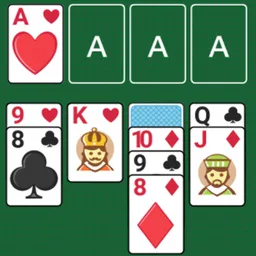




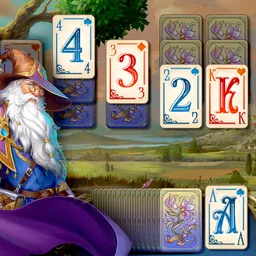


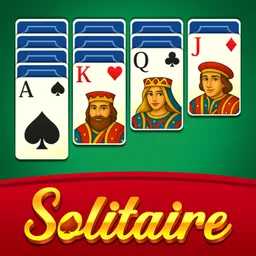


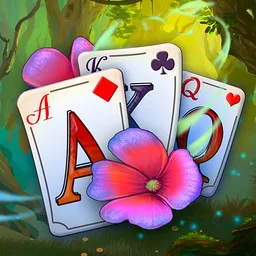




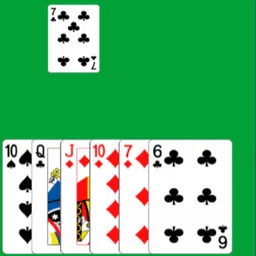









This collection calls itself 4 in 1 Solitaire in its own in-game description, and that name is the whole pitch: four classic solitaire games — Klondike, Spider, FreeCell and Pyramid — sitting behind one menu so you can switch between them without leaving the page. Playgama distributes it, but a distributor is not a studio, and no individual developer or team is credited on the listing beyond that, so the real studio behind this specific build could not be verified.
Each of the four games it bundles has its own separate history. Klondike is the oldest of the group, descended from the European Patience games of the 1700s and carrying the Klondike name since roughly the Gold Rush era of the 1890s, though the exact reason for that name was never documented. Spider Solitaire is newer, generally traced to the early twentieth century and named for the eight-legged spread of its tableau, and it became a household fixture only after Microsoft bundled it with Windows in the late 1990s. FreeCell traces back further than most people assume, to a card game called Baker's Game that a computer scientist named Paul Alfille adapted and named FreeCell in 1978; Microsoft's decision to ship it as a default Windows game in 1995 is what actually made it famous. Pyramid is the outlier of the four, an older patience game built around clearing pairs of cards that add up to thirteen rather than building ordered runs.
The appeal of bundling them is that each game asks for a different kind of attention. Klondike rewards patient sequencing and a good memory for which tableau cards are buried. Spider is closer to a logic puzzle, since you're sorting a much larger deck into full same-suit runs with limited empty columns to work with. FreeCell removes luck almost entirely — nearly every FreeCell deal is theoretically solvable, so a loss is closer to a planning mistake than bad fortune. Pyramid is the fastest of the four, closer to a quick arithmetic exercise dressed up as a card game.
This particular collection presents all four with matching casino-styled visuals and the same drag-or-tap controls, which keeps the experience consistent even as the underlying rules change from game to game. It also supports an unusually wide set of languages for a browser card game — English, Arabic, Azerbaijani, Chinese, German, Dutch, Spanish, French, Turkish and Vietnamese are all listed, suggesting the build was made with a genuinely global audience in mind rather than a single region.
Who it suits is anyone who likes solitaire but gets bored running the same layout for weeks at a time. Being able to jump from a slow Klondike session into a fast Pyramid round without opening a different tab is the actual convenience here, more than any single game inside the bundle being exceptional on its own. It's also a reasonable way to figure out which solitaire variant actually suits your taste before committing to a dedicated version of just one of them elsewhere on the site.
It runs free in the browser on LemonArcade, no download or account required, on both desktop and mobile. Session length is entirely up to you — a Pyramid round can be over in under two minutes, while a difficult Spider deal can run considerably longer — and difficulty varies the same way, since FreeCell and Spider are meaningfully harder to think through than Klondike or Pyramid.