 LemonArcade






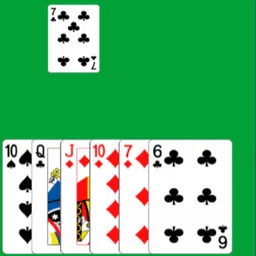


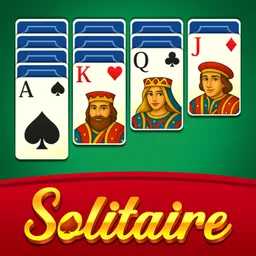









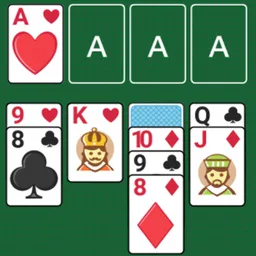







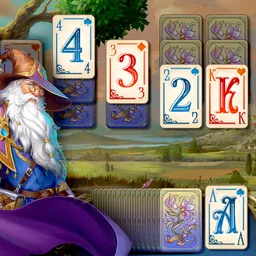



Solitaire: The Eternal Deck is a Klondike-style patience game — the same layout most people mean when they just say solitaire, with a tableau of overlapping cards, four foundation piles and a draw pile. Klondike itself has no single confirmed inventor; the layout spread through 19th-century patience-game collections and picked up its popular name during the Klondike Gold Rush era, long before it became the default game bundled with every computer. This build's specific developer is not credited beyond Playgama, the distributor, in available listings.
The rules follow the format closely: build tableau columns in descending order with alternating colors, move only a king into an empty column, and send cards up to the foundations in ascending order by suit to win. Cards can be moved by drag or a single tap, and the game executes whichever legal move that tap implies automatically rather than asking you to place it exactly. Because the single-tap system infers your intended destination, the game will decline a tap that has no legal target rather than making a move for you, which keeps the automation from ever overriding a choice you did not actually make.
Three choices push it past a bare digital port. Undo is unlimited, so testing a risky sequence costs nothing if it dead-ends. The deal generation is tuned toward winnable boards rather than pure randomness, which quietly removes some of classic Klondike's worst luck. And scoring rewards patience over speed: playing a card onto the tableau before later sending it to a foundation earns a bonus that a card moved straight to its foundation does not. That patience-rewarding bonus means the highest-scoring approach is rarely the fastest one, since routing a card through the tableau first takes an extra move compared with sending it straight to a foundation the moment it is playable.
The stock pile can also be refreshed through a dedicated button once it runs empty, which removes the traditional limit most physical and digital Klondike games place on how many times you can cycle back through the draw pile. Combined with unlimited undo, it makes this a considerably more forgiving version of the format than the pen-and-paper original. It is a deliberate design choice rather than an oversight: a game called The Eternal Deck is clearly aiming for a version of Klondike that almost never simply dead-ends, at the cost of some of the tension that scarcity of redeals normally creates.
It suits players who want classic solitaire's familiar rhythm without classic solitaire's frequent unwinnable deals, and anyone who prefers to think a hand through by testing moves rather than committing blind. It is a poor fit if you specifically want the harsher, limited-redeal Klondike variant some other sites still offer. Speedrunners chasing the fastest possible clear time will likely find the unlimited undo removes the tension that makes speed solitaire interesting elsewhere, since there is no cost to a wrong guess beyond the seconds spent reversing it.
On LemonArcade it runs free in the browser on desktop and mobile with no download or account. The game does include optional in-game purchases, sessions typically run five to fifteen minutes per deal, and the winnable-leaning deal generation keeps the difficulty gentler than strict Klondike while still requiring real sequencing. Because the difficulty is intentionally softened, it is a reasonable choice for someone who wants to unwind with cards rather than grind out a genuinely tough deal, and the optional purchases appear to cover extras rather than anything that changes the core rules.