 LemonArcade

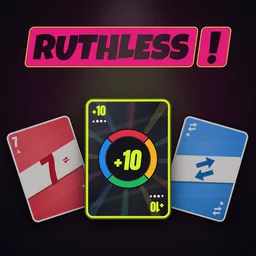
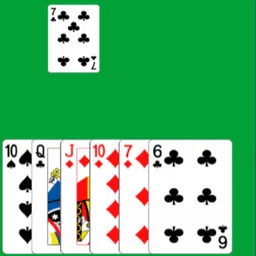






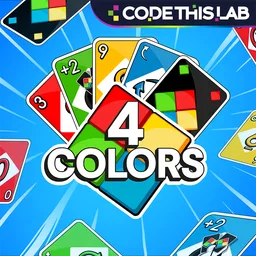




















4 Color Card Game is a browser build of the shedding-card formula Uno made a household name: match the top discard by color or number, unload action cards to disrupt your opponents, and be the first to empty your hand. Playgama credits the studio CodeThisLab with the underlying build, released in early 2025, and the rules here track Uno closely enough that anyone who has played it at a table will recognize every card type within a round.
Uno itself descends from Crazy Eights, an older shedding game played with a standard deck, which games publisher Mattel picked up and restyled with its own dedicated deck of red, yellow, green and blue cards in the 1970s. This version keeps that four-color identity in its name and its card art, while trading a physical table and a stack of real cards for three AI opponents you can jump straight into without waiting on a lobby. That's a meaningful difference from the source material, where the whole social ritual — slapping down a Draw Four on the player who least expects it — depended on having other people in the room; here the entire experience is compressed into a solo session against opponents that never hesitate or bluff.
The core loop is the familiar one: your hand sits at the bottom of the screen, and you click a card that matches the discard pile's color or number to play it. No match means drawing from the deck instead. Wild cards let you pick a new color outright, and the standard disruption set — Skip, Reverse, Draw Two — shows up on schedule to swing a round that looked settled a moment earlier. Because three opponents are drawing and discarding at the same pace you are, the discard pile's color tends to cycle faster than it would at a four-player table with more hesitation between turns, which shortens rounds compared to the tabletop version.
Where the game earns its keep is in the small procedural touches that make single-player Uno feel less like playing against a wall. The penalty system for forgetting to signal your last card is preserved as a one-click TAP button, and turns resolve automatically after each action rather than waiting on manual confirmation, which keeps a round moving at the pace of a real table game instead of a slow menu-driven one.
It suits players who want Uno's push-your-luck card counting without organizing three other people to play it. There is no story, no progression system and no deck customization — every round is a fresh shedding race against three computer opponents, which makes it better suited to short, repeatable sessions than to a long single sitting. The trade-off is that the AI opponents don't bluff or negotiate the way human players do, so the social gamesmanship that makes Uno memorable at a real table is largely absent here; what's left is the pure card-counting and timing puzzle underneath it.
On LemonArcade it runs free in the browser with no download or account, controlled entirely by mouse clicks. It's built for desktop rather than touchscreens, so mobile play is possible but noticeably more comfortable with a pointer than a finger. A single round runs a few minutes, and the difficulty comes entirely from the luck of the draw and how aggressively the AI opponents time their own action cards, not from any adjustable setting.