 LemonArcade

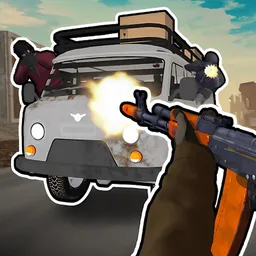




Bandana Blitz is a retro run-and-gun action game in the mould of the arcade shooters that filled 1990s cabinets. You control a lone soldier moving left to right across a 2D battlefield, firing at enemy squads, dodging grenades, hopping onto vehicles and taking down oversized bosses at the end of each stage. The pixel-style presentation, the bandana-wearing hero and the mix of infantry, tanks and helicopters put it squarely in the tradition of Metal Slug and Contra, without being connected to either series.
A session is a stage of the campaign: you push forward, clear waves of enemies, free captives tied up along the route, blow up supply crates and complete whatever special objective the level sets. At the end a boss blocks the way, usually a vehicle or a machine with a weak point you have to learn. The campaign is described as long, so Bandana Blitz is meant to be played in short bursts over many sittings rather than finished in one go.
What separates it from a straight arcade port is the progression layer. Weapons unlock as you play, the soldier can be upgraded, and tactical modules add passive effects you slot into a loadout. Battlefields change as you advance, and outside the main campaign there are daily challenges and boss hunts that reward a different kind of play: shorter, more focused and built for testing a particular loadout against a particular threat. Rewards from those modes flow back into the campaign, so the two halves of the game feed each other rather than competing for your time.
Bandana Blitz sits in the Action, Arcade, 2D and Fighting categories. The first three are obvious. Fighting fits because the boss encounters play like duels: you read patterns, pick openings and commit to a damage window, which is closer to a boss-rush fighter than to a scrolling shooter. The game is for players who grew up on coin-op shooters, and for anyone younger who likes the modern loadout-and-upgrade loop wrapped around that classic feel. It also works for players who never finished the arcade originals, since progression here softens the difficulty curve over time.
It is a game about mastery through repetition. Early stages forgive mistakes, but later ones expect you to know enemy spawn points, to save heavy weapons for bosses and to understand which modules fit which battlefield. That is the hook: every unlock makes the next stage more manageable, and every stage teaches something the next one demands. The retro presentation is deliberate: chunky sprites, bold explosions and bosses that fill the screen, all readable at a glance so you always know where the next threat is coming from.