 LemonArcade





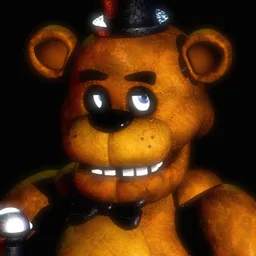











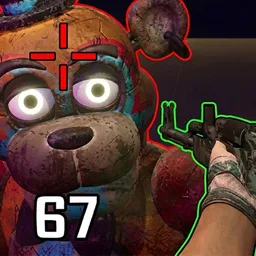








Five Nights at Freddy's 4 leaves the pizzeria behind. You are a frightened child in a bedroom, and from midnight to 6 AM nightmarish versions of the animatronics creep towards you from the hallways on either side, from the closet and across the bed. There are no security cameras, no power meter and no office. You move around the room yourself, from one door to the other, to the closet and back to the bed, and you protect yourself with two things only: holding a door shut and a flashlight. Almost everything else depends on what you can hear.
A night is a loop of listening. You go to a door and wait at it, because the only reliable information comes from sound. If you hear breathing, something is standing just outside, and you hold the door closed until it leaves; switching on the flashlight at that moment is a mistake. If you hear nothing, a quick beam down the hallway checks it and pushes back anything further away. Between doors you check the closet and turn around to the bed, where small creatures, the Freddles, gather. The game's instructions tell you to chase them off with the flashlight, and ignoring them is how a quiet night goes wrong.
As the nights go on, the pressure tightens and careless checks are punished faster. In Scott Cawthon's original, the fifth night centres on Nightmare Fredbear, who ignores the flashlight, and the PC version adds Atari-style minigames between nights that follow a bullied boy in 1983, plus a red-light, green-light challenge against Plushtrap that can take two hours off the next night. A Halloween update in 2015 added extra content for players who had finished the game. The listing for this browser version covers the bedroom survival itself and does not mention these extras, so treat the nights as the whole game here.
This is the entry in the main series that leans hardest on sound. It descends from the first three Five Nights at Freddy's games, which kept you in a security office behind cameras, but it strips that comfort away and makes you physically turn and walk to each threat. Headphones make a real difference, because the decision you make at a door rests on a faint noise. When the original came out, critics praised its atmosphere and sound design, while some found the dependence on audio cues frustrating. It suits players who already know the series and want a game that tests concentration and nerve rather than speed.
Horror is the core category: the Nightmare animatronics are torn, sharp-toothed versions of the familiar cast, and the game is built around the dread of not knowing what waits behind a door until you listen. Simulation fits in a quieter way. You act out a child's routine of checking every corner of a dark room, and each tool follows fixed rules: a held door blocks, the beam repels only when nothing is right at the threshold, and the bed has to be cleared on a schedule you set yourself. Learning those rules, rather than watching camera feeds, is what this chapter asks of you.