 LemonArcade






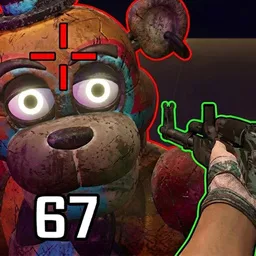















Five Nights at Freddy's Remaster is a browser rendition of the first Five Nights at Freddy's: you are the night guard of a pizzeria, seated in an office you never leave, surviving from 12AM to 6AM for five nights while four animatronic mascots try to reach you. Your tools are a camera monitor covering the building, a light and a steel door on each side of the office, and a shrinking power reserve that everything you do draws from. When the power hits zero, the doors open and the lights die.
The design it remasters comes from Scott Cawthon's 2014 original, a game built alone on a small budget that became one of the most influential horror releases of its decade. Its central idea was subtraction: no movement, no weapon, no chase — it removed the legs and asked what fear looks like when all you can do is watch and wait. To be clear about provenance, this browser version is a fan-made remaster distributed through Playhop, not an official Cawthon release: a restoration of his design for machines that can only run a browser tab.
What makes the game Strategy as much as Horror is that it is an economy. Checking a camera costs power. Holding a door shut costs more. The whole night is a budgeting problem: you are trading electricity for information and safety, and the player who spends on reassurance — flicking cameras just to feel in control — is the player who sits in the dark at 5AM. Learning the game means learning which checks are actually necessary, which is a colder and more interesting skill than reacting to jumpscares.
The four threats justify separate mental files. Bonnie and Chica roam the building and arrive at your left and right doors respectively; the door lights exist to catch them standing there, the doors to shut them out. Foxy stays behind the curtain of Pirate Cove and advances in stages, his pace linked to how you use the cameras, before sprinting down the hall when fully emerged. Freddy is the slow, patient one — barely active early, increasingly dangerous later, and the one you least want to lose track of. Each teaches a different lesson about attention.
The audience is broader than the screamer-video reputation suggests. Failure is announced by a lunging robot, and players who cannot tolerate that should sit this one out. But the moment-to-moment play is quiet and almost administrative — listening, glancing, rationing — which is why it works on a school Chromebook between classes: short nights, no download, and a game that rewards a calm head over fast hands.