 LemonArcade



















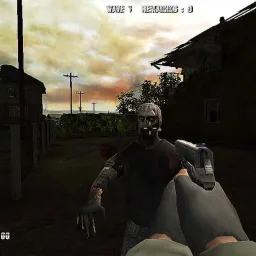










They Are Coming is a side-scrolling zombie defense game about holding a line. The undead shamble in from one side of a flat 2D battlefield, your survivor stands between them and everything worth protecting, and the loop alternates two modes: shooting down the current wave, then spending what the wave paid out on barricades, traps, better guns and upgrades before the next one arrives. It is a shooter in the seconds and an economy in the minutes, and the second layer is where the game is actually won.
The pedigree is mobile. They Are Coming originated as a phone title that accumulated millions of downloads and later expanded toward PC, and this browser edition carries that lineage's virtues: instant legibility, one-more-wave pacing, a difficulty curve tuned for short sessions that stack into long ones. The core image — a lone gunner backpedaling as ragdoll zombies absorb fire — is understandable in one screenshot, a large part of why the formula travelled so well across platforms.
What makes it more interesting than a shooting gallery is the genre splice. From tower defense it takes the idea that static structures do scheduled work: barricades buy seconds, mounted defenses convert position into damage, and a well-built chokepoint fights alongside you. From roguelike design it takes escalation and the run structure — waves grow relentlessly, and each attempt is a fresh negotiation with the unlock tree rather than a scripted level list. From base building it takes the between-wave breath where you decide what this particular run is going to be: fortress, arsenal, or something in between.
The central tension is attrition arithmetic. Zombies are individually trivial and collectively unstoppable, so every decision reduces to throughput: how many bodies per second your setup can delete, and how many seconds your defenses add when the horde reaches them anyway. A bigger gun raises the first number; fortification raises the second. Money spent on one is money not spent on the other, and most failed runs can be autopsied as an imbalance rather than as bad aim.
On LemonArcade it sits under Strategy and 2D, a fair description of where the skill lives. Aim matters, but the flat side-view battlefield keeps shooting manageable; the differentiating skill is budgeting under pressure. The audience is players who like physical feedback — hordes crumpling under fire — wrapped around a planning game, and the wave structure suits interrupted play: a Chromebook session between classes maps neatly onto a handful of waves.