 LemonArcade








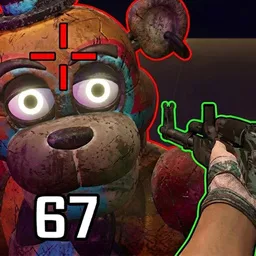












Ultimate Custom Night is the series taken to its logical conclusion. Instead of a fixed cast and a set of scripted nights, you are handed a roster of roughly fifty animatronics drawn from every previous entry and asked to build your own shift. Each character gets an individual difficulty slider from 0 to 20, and the game you end up playing is entirely a product of the choices you make on that menu before the night begins.
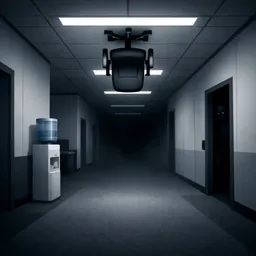
The office reflects that ambition. Where the first game gave you two doors and the second gave you a mask, here you are juggling almost every mechanic the series has produced at once: side doors, air vents, ventilation ducts, a heater, an air conditioner, a global power supply, an audio lure to pull characters away from you, and a laptop used to monitor and reset systems. Some animatronics are stopped by one specific tool and are completely immune to the rest, so a roster of six characters can demand six unrelated responses in the same minute.
That combinatorial quality is the point. A night with three characters at difficulty 20 plays nothing like a night with twenty characters at difficulty 3, and neither resembles the notorious configuration where every slider is pushed to maximum. The game rewards study rather than reflexes alone: knowing that a particular character is countered by the heater, or that another responds only to audio, matters more than raw speed, because guessing wrong costs you a system you needed elsewhere.
Released in 2018 by Scott Cawthon as a free title, it was built as a celebration of the series rather than a continuation of its story, and it works best as a sandbox. New players can set two or three familiar characters to a low difficulty and learn one system at a time. Long-time players get a difficulty ceiling that is genuinely, deliberately unreasonable, along with a set of themed preset challenges that constrain the roster in specific ways.