 LemonArcade
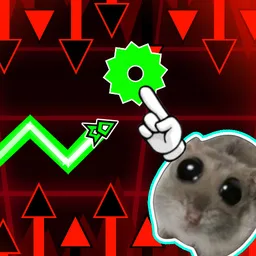
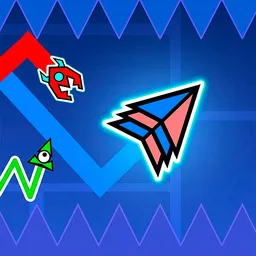












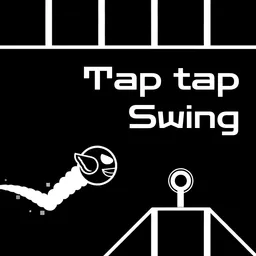


Wave Challenges by sssatoru is a gauntlet built on the most feared mode in Geometry Dash: the wave. Where the cube jumps and the ship flies, the wave zigzags — a diagonal sawtooth that climbs at forty-five degrees while you hold and falls at forty-five degrees when you release, with no cruising, no leveling off, and no forgiveness. This game takes that mode, and only that mode, and makes nearly three thousand players' worth of trouble out of it.
The wave's reputation in the Dash community is earned. Because it moves diagonally at fixed angles, there is no such thing as holding steady — staying inside a horizontal corridor means alternating hold and release in a constant rhythm, and the tighter the corridor, the faster the alternation. Top-end wave sections demand input frequencies that resemble drumrolls, which is why 'wave spam' became its own named skill.
This is a rhythm game wearing an arcade skin, and the developer knows it. Corridors are laid out with musical logic — tightening and releasing in phrases, syncing their squeeze points to tempo — so the hands that do best are hands that lock into the beat rather than reacting obstacle by obstacle. Reading ahead and tapping in time beats raw reflex every run.
The difficulty curve does the wave's signature trick: it converts panic into technique. First corridors feel impossible at half the speed later ones demand; two sessions in, your tap frequency has doubled without your noticing, and the early levels feel padded. Few genres make skill growth this legible — the evidence is simply how narrow a corridor you can now live in.
It is the sibling of Ship Challenges, from the same specialist developer, and the pairing is deliberate: ship training teaches feathered control, wave training teaches rhythmic alternation, and the two hands together cover the continuous-control half of Geometry Dash. Players grinding toward Dash's harder levels use exactly this split in their practice.
On LemonArcade it runs free in the browser on desktop, mobile and tablet. One input — click, spacebar or touch — is the entire interface, sessions are naturally short and intense, and the loop is the purest in the reflex genre: die at the squeeze, understand exactly why, and go again before the understanding fades.