 LemonArcade

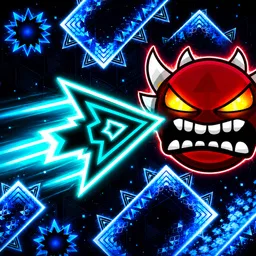




















Wave God: Multiplayer is a hardcore rhythm arcade game built on a single input: hold to climb, release to dive. The wave you control moves forward at constant speed and travels only in fixed diagonals, so every run comes down to deciding when to flip between rising and falling while a corridor of obstacles scrolls toward you, its patterns synced to a dynamic beat. The twist is in the title — other players share the corridor online, and a run is not just a survival attempt but a live race.
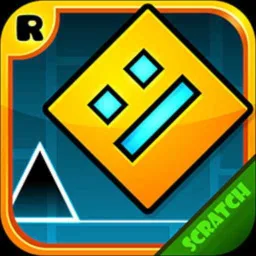
The wave itself is an inherited mechanic, and the game does not pretend otherwise. It descends directly from the wave gamemode in Geometry Dash, RobTop's rhythm platformer, where the arrow-shaped vehicle carves diagonal lines through the tightest passages levels can offer. Wave sections earned a reputation for separating casual players from dedicated ones, and the mechanic proved strong enough to carry entire standalone games. UFOG has worked this territory before with Wave God 2.2 || Challenge, and this entry applies that experience to online racing, which almost nobody else in the subgenre attempts.
The fixed diagonals are what make the wave different from other one-button movement schemes. There is no steering and no curve: the wave draws a sawtooth, a chain of straight segments at a constant angle, and its position at any moment is entirely determined by where you flipped. That has a hard consequence — errors compound. A flip made slightly late does not cost you slightly; it shifts every segment that follows, and a gap that was passable from the correct height becomes a wall from the wrong one.
Because the obstacle patterns follow the music, the skill that transfers best here comes from rhythm games rather than from platformers: reading ahead. Players who stare at the wave itself react to walls as they arrive and lose; players who keep their eyes on the right edge of the screen see the pattern a beat early and place their flips before the corridor demands them. The beat is not decoration — it is a schedule for the obstacles, and listening tells you when the corridor is about to tighten before your eyes confirm it.
The multiplayer layer changes the psychology of a genre that is normally solitary. A standalone wave game is usually you against a course, measured in attempts; here the same corridor carries opponents, and the pressure to keep pace competes directly with the discipline the wave demands. Playhop lists the game at 12+, and the same hold-and-release input works on keyboard, mouse and touch, which is why it holds up on the school Chromebooks much of its audience plays on.