 LemonArcade







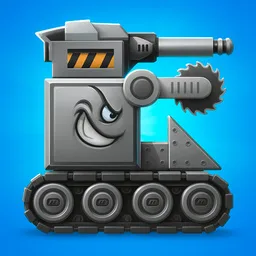


Tank Battle.io is a last-tank-standing arena game: a lobby of tanks spawns into a shared map, a closing boundary squeezes the playable space, and the match ends when one machine remains. Between spawn and that ending sits a pickup economy — destroyed tanks and scattered upgrades feed the survivors, so the arena's population gets smaller and individually more dangerous at the same time. Matches are short by construction, since the shrinking space makes stalemates physically impossible.
The name declares its family. The .io suffix comes from Agar.io, the 2015 browser phenomenon whose instant-join, no-account multiplayer spawned a whole genre and turned an Indian Ocean domain extension into a design label. The shrinking arena comes from a different branch of history — the battle royale format that PUBG and Fortnite made universal, whose closing circle solved the oldest problem of last-man-standing games: players who win by hiding. Tank Battle.io, from SonataGames, splices the two together: .io accessibility with battle royale structure.
Putting the format in tanks changes its physics. A tank is not a cursor — it carries momentum, turns deliberately, and cannot instantly become somewhere else, so every decision lands slightly early or slightly late. Shots must be led, retreats must be planned before they are needed, and two tanks circling each other are solving a geometry problem rather than testing reflexes. That deliberateness separates it from the twitch end of the .io family: positioning errors here take seconds to reveal themselves and are rarely refundable.
The upgrade layer sets the pace of aggression. Combat kits collected across the arena — rocket systems, flamethrowers, machine guns — change what your tank threatens and at what range, and they come from being present where things get destroyed. That creates the genre's classic tension: fighting early is dangerous but feeding, hiding is safe but starving. The strongest players treat other tanks' battles as harvests, arriving as fights end rather than as they begin.
It sits under Multiplayer and 2D — the cartoonish tanks are modelled in 3D, but the top-down camera flattens play into one readable plane, which is what the category actually describes. It suits short sessions unusually well: a match resolves in minutes, joining takes seconds, and no progression is held hostage between games. For players who find aim-heavy shooters frustrating, this is the strategic wing of the genre — won with map reading and patience more than with precision.