 LemonArcade
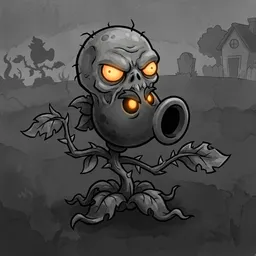


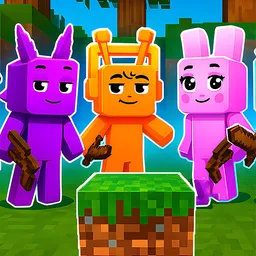

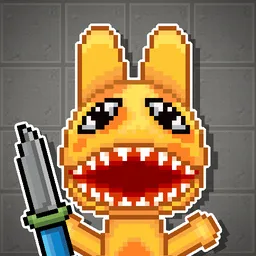


















Sandbox Playground: Plants vs Zombies removes the game from Plants vs Zombies and keeps the cast. There are no lanes to defend, no sun to collect and no wave arriving on a timer — instead you get a stage, a roster of plants and zombies, and the freedom to place any mixture of the two and watch what unfolds. It is a battle sandbox: the entertainment is authored by you, executed by the simulation, and different every time you change a single placement.
The cast it borrows comes from one of the most carefully designed games ever made. Plants vs Zombies, released by PopCap in 2009 and designed by George Fan, taught tower defense to a mass audience through peashooters, sunflowers and wall-nuts — each unit a single readable idea. That readability is what makes the roster ideal sandbox material: anyone who has met the originals already understands roughly what each piece should do, so experiments here start from intuition rather than from a manual.
The other parent is the battle simulator sandbox, a genre that grew up around Totally Accurate Battle Simulator and the Melon Playground family: no objectives, no failure, just units, simple rules, and a player acting as director rather than competitor. The genre's insight is that composing a battle is a different pleasure from fighting one — closer to arranging dominoes than to toppling them — and that watching a scenario you built resolve itself carries its own kind of suspense.
Aimlessness is only the surface; the actual activity is experimental. Every session generates questions with testable answers: how many basic zombies does one armed plant absorb, does a swarm beat a wall, what happens when both sides are made absurd at once. Because resetting costs nothing and no score is watching, the sandbox quietly builds the systems literacy — unit values, matchups, positioning — that objective-driven games make stressful to acquire.
It is filed under Sandbox and Strategy, and the pairing is accurate: the sandbox supplies the freedom, and strategy emerges the moment you start caring whether your compositions win. It suits creative players, and younger players especially — nothing punishes, nothing times out, and the worst outcome of any experiment is a stage worth clearing and rebuilding. It is also the rare browser game where a group around one screen genuinely works, since staging battles is naturally collaborative.