 LemonArcade
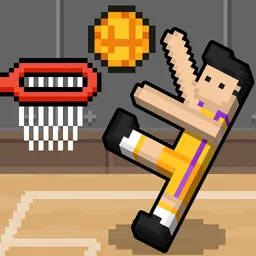
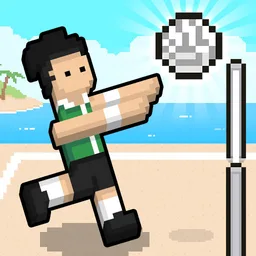
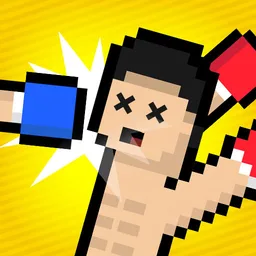

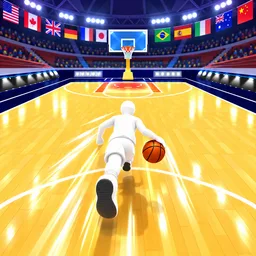






Basket Random is basketball reduced to a single key per player. Each side controls a pair of wobbly ragdoll athletes with one button — W for player one, Up Arrow for player two — that makes them jump, flail toward the ball and, on release, throw it at the hoop. First to five baskets wins. Between every point the game redraws itself: a new court, new player bodies, sometimes new physics, so the match you were winning is never quite the match you continue.
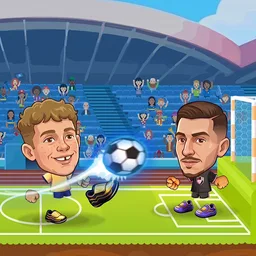
It comes from RHM Interactive, the studio whose Random series has quietly become a genre of its own. Soccer Random, Basket Random, Boxing Random and Volley Random all apply the same formula — one button, ragdoll bodies, a rule set that reshuffles itself — to a different sport, and together they dominate the two-player corner of browser gaming. Basket Random is arguably the purest expression of the formula, because basketball's single shared objective, one ball and one hoop per side, keeps every scramble legible.
The randomness is not decoration; it is the balancing mechanism. In most versus games, a stronger player wins every match and the weaker one stops wanting to play. Here, the court reshuffle acts as an equalizer: just as one player finds a reliable shot, the geometry changes underneath it. Skill still matters — reading the new setup faster, timing the release better — but variance keeps the score close enough that both people stay invested. It is a game engineered so that losing is funny rather than humiliating, which is precisely what a shared-keyboard game needs.
One button per side is also what makes local multiplayer practical at all. Two people crowding one keyboard is normally a mess of overlapping hands and keys that refuse to register together; with exactly two keys in use, W and Up Arrow, both players get a comfortable corner of the board and nothing conflicts. The design constraint that makes the game chaotic to play is the same one that makes it physically playable side by side — on a school Chromebook as much as anywhere.
Matches take two or three minutes, there is a CPU opponent when nobody is around, and on touchscreens the court splits down the middle so each player taps their own half. The categories 2 Players and Sports both understate it slightly: this is less a basketball simulation than a machine for generating close games between mismatched friends.