 LemonArcade





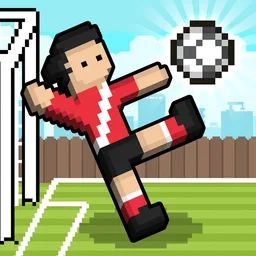



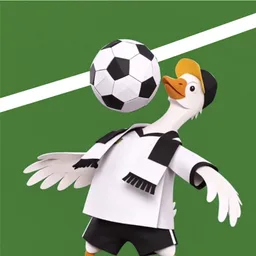
Volley Random is volleyball with the movement removed. Your ragdoll athletes stand rooted to their spots on one side of a net, and your single key does exactly one thing: launch them into the air. Where the ball goes depends on when you jumped and which part of a flailing body it meets. Rallies continue until the ball touches a floor, the side that let it drop concedes the point, and the first side to five wins — with the court, the net and the ball itself liable to be different by the time the next serve arrives.
It is part of RHM Interactive's one-button sports family, but volleyball gives the formula a rhythm none of its siblings have. The other games are about taking something — possession, a goal, a knockdown. A rally is a different kind of object: both sides are simultaneously keeping the ball alive and trying to kill it, and every single touch is both a rescue and an attack. You cannot separate defence from offence, because the same jump that saves the ball also decides the trajectory you hand back across the net.
That makes each touch a small physics negotiation. You do not aim in this game; you time. Jump early and your players meet the ball high on their arc, popping it up steep and slow — a safe touch that buys time but hands the opponent an easy read. Jump late and the contact comes flat and fast, a genuine kill attempt that clears the net by inches or not at all. Every return is a bid somewhere between those poles, and the rally is the sequence of bids, each one constraining what the other side can offer next.
The net is what turns timing into geometry. Because nobody can move sideways, the whole game is angles over a fixed obstacle: the ball's arc, the net's height, the distance to the far floor. When the between-points reshuffle raises the net, flat kills stop clearing it and rallies stretch long and looping. A lower net or a heavier ball collapses that space and points end in two touches. Reading the current geometry — how high, how heavy, how wide — is the skill that carries across points.
Matches take a few minutes, a CPU opponent covers solo play, and two people share a keyboard with one key each — W and Up Arrow — or halves of a touchscreen. It sits in 2 Players and Sports, and long rallies give it a tension its siblings lack: every extra touch raises the cost of being the side that finally lets the ball fall.