 LemonArcade
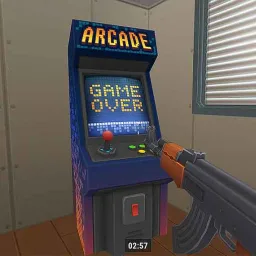



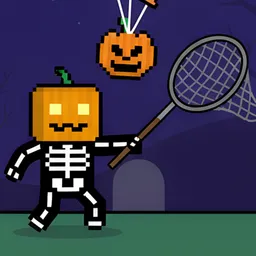



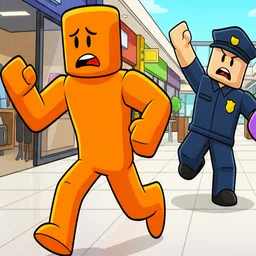









Prop Hunt Together, by Rudolf Wagner, is hide-and-seek with a disguise mechanic: the hiding player transforms into ordinary objects — a crate, a chair, whatever the room already contains — and tries to pass as furniture while the hunter sweeps the map looking for the one prop that does not belong. It is built for two people on a single computer, one on WASD choosing disguises, the other on the arrow keys doing the hunting, which turns a famously online format into something playable at one desk.
The lineage here is unusually well documented for a browser game. Prop hunt began as a community gamemode for Garry's Mod, created by Andrew "AMT" Theis, where one team disguised as physics props and the other hunted them. The idea proved portable: it spread to Team Fortress 2 servers, then graduated into official modes in Call of Duty titles and into thousands of Fortnite creative islands. What this game inherits is the format's core discovery — that pretending to be an object is funnier and tenser than any conventional hiding spot.
Underneath the comedy is a clean information game. The hider knows exactly where they are; the hunter knows only what the room usually looks like. Every round is the hider trying to add one object to a scene without changing its logic, and the hunter reading the scene for the detail that breaks it — a barrel in a doorway, a plant with no pot to sit on, a box facing the wrong way. Skill on both sides is really scene literacy: hiders learn what belongs where, hunters learn to notice what does not.
The maps are laid out like small mazes, and that geometry serves both roles. Corridors and partitioned rooms mean the hunter can never see everything at once, giving hiders windows to relocate between sweeps — the format's riskiest and most rewarding move. Movement is itself a resource: a stationary disguise is safest but slowly gets ruled out as the hunter clears rooms, while a moving prop can reset the search entirely at the cost of being caught mid-scuttle.
It carries Multiplayer, 2 Players and Casual, and the middle label is the interesting one. Most prop hunt implementations assume servers and headsets; this one compresses the format into a duel at one keyboard, where the psychology gets sharper because your opponent is beside you. Rounds are short, the roles swap, and half the fun is the moment of discovery either way — which makes it a natural fit for two students on one Chromebook between classes.