 LemonArcade







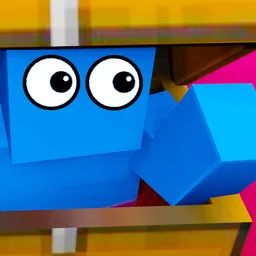

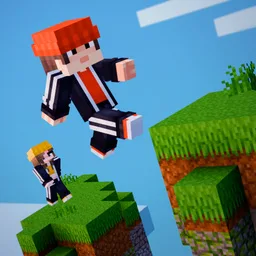

Crazy Super Bunnies 2 is a platformer from PM Games in which two rabbits, Bunny and Danny, travel through blocky, Minecraft-styled lands hunting carrots. The levels borrow more than a look from that inspiration: there are minecarts to ride, pickaxes for breaking through blocks, dynamite that removes terrain less gently, and hidden routes that descend into a Nether-style underworld. It can be played alone, but it is built with a second player in mind, and the whole game runs on one keyboard divided into a left half and a right half.
The most distinctive thing about it is how the bunnies move. They do not walk; they rotate. The movement keys spin the character forward and backward, jumping launches it along whatever angle the rotation has produced, and a separate key grabs hold of things and lets go of them. It is closer to a physics toy than to the crisp run-and-jump of a traditional mascot platformer, and it is why the series looks chaotic in motion. Precision here means controlling your angle before you commit, not pressing a direction at the right frame.
As a sequel it is a study in how browser games iterate. The first Crazy Super Bunnies was competitive: flag races and battles across three lands, two players trying to beat each other with the same tumbling movement. The second keeps that movement intact and rebuilds everything around it — versus modes give way to a cooperative adventure through structured levels, each with star conditions to satisfy, plus coins that buy shields, healing and entry to bonus levels, and crystals spent on outfits. Portal sequels rarely reinvent their core verb; they change what the verb is for, and this one turned a fight into a journey.
The cube aesthetic does practical work. When every surface is a block, every edge is a clean right angle, and in a physics platformer where you arrive at ledges spinning, knowing exactly where a platform ends matters more than it would under ordinary movement. The style that reads as a Minecraft homage is also the friendliest possible geometry for this control scheme — no ambiguous slopes, no decorated edges that look solid but are not.
Two players share not just a keyboard but a single screen, and that shapes the experience as much as the controls do. The view cannot follow both bunnies if they separate, so the pair have to travel as a unit, and the pace of a level becomes something negotiated rather than chosen. The game also sits in a long line of animal-mascot platformers — a format that began as console system-sellers and now lives largely on browser portals, where a bunny with an odd movement gimmick is exactly the kind of pitch that carries. LemonArcade files it under Platformer and 2 Players, and the second label is where it earns its keep.