 LemonArcade














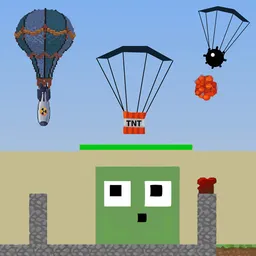
















Gamer's Mod is a physics playground rather than a game with an objective. It descends from the sandbox mod tradition — the lineage that produced Garry's Mod — where the software hands you a world, a set of objects and a physics engine, then deliberately declines to tell you what to do with them. There is no score, no timer, no win condition and no fail state. What you get instead is a room, a spawn menu and the freedom to find out what happens.
The core activity is building and breaking. You spawn props, ragdolls, tools and weapons, arrange them, weld or attach them together, and then test whatever you have made. Most of what players build falls over, catches on something or launches in an unintended direction, and that is the entertainment rather than a failure of the design. A sandbox is judged by how interesting its accidents are, and physics engines are reliably good at producing interesting accidents.
Ragdolls deserve particular mention because they are the genre's signature. A ragdoll is a character model with no animation, driven entirely by joint physics, which means it responds to force in ways nobody scripted. Dropping one down a stairwell, attaching it to a vehicle or catching it between two props produces results that are unpredictable but never random — they follow real rules, which is exactly why watching them is satisfying.
Sandbox games ask more of the player than structured ones do. If you arrive expecting objectives you will run out of things to do in five minutes; if you arrive with an idea to test, the game will keep going as long as your curiosity does. The audience it serves best is the one that treats games as toys — people who would rather build a contraption nobody asked for than complete a level someone else designed.