 LemonArcade



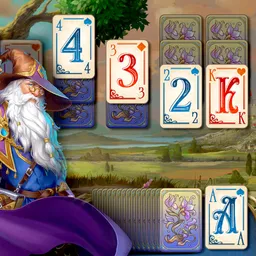
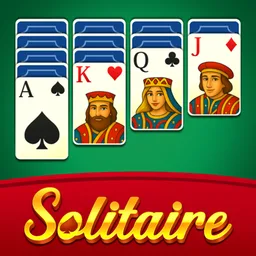







Ola! Solitaire is a Klondike solitaire game built around one idea: make the classic patience game comfortable to play. The cards are large, the rules are the standard ones most people already know, and the table can be laid out for a right-handed or left-handed player. You can play Draw 1 or Draw 3, start a random deal or type in a numbered one, and every one of the 999,999 deals has been checked by a solver so that a winning line exists from the opening position.
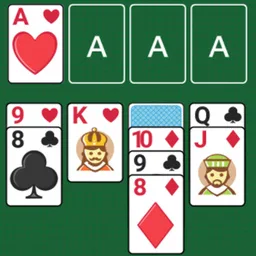
A session follows the familiar Klondike shape. Seven tableau columns are dealt with the top card face up, the rest of the deck sits in the stock, and the goal is to build four foundations from Ace to King by suit. You move cards between columns in descending order with alternating colors, turn stock cards into the waste, and work toward uncovering the face-down cards. Drag a card to move it, or use a single tap and the game places it where it can legally go.
What sets Ola! Solitaire apart from a bare Klondike is the support around the table. Undo takes back a move when a plan changes, Auto move sends cards that are safe to the foundations, and Hint suggests a move from the current position rather than replaying a canned solution. Those tools matter most for players who want the puzzle without the frustration of a dead end they could not have seen coming, and none of them is forced on you: a purist can ignore all three and play the deal straight.
Beyond individual deals there is a light layer of progression: Daily Challenges, a Journey mode that strings deals together, collectible cards to unlock and monthly trophies to earn. Each win awards experience and coins, raises your level and extends your win streak, while the Statistics screen records time, moves, score and personal bests. Klondike descends from the patience games popularised in the nineteenth century and made universal by the Windows version of 1990; Ola! Solitaire belongs firmly to that lineage.
It is meant for anyone who likes solitaire, but it is explicitly designed with older players in mind, which is why the cards are big and the controls forgiving. It works on a phone, a tablet or a desktop browser, in landscape or portrait, and because every deal is winnable it suits people who dislike the feeling of being dealt a losing hand. Younger players and solitaire veterans get the same game; the comfort features simply stay out of the way until they are wanted.